
There are three kinds of car wash POS on the market: the enterprise suites built for big tunnel chains, the cloud platforms built for independents, and the membership apps that bolt onto whatever you already run. This guide explains what each does well, where it falls short, and the questions to ask before you sign anything. Yes, we make one of them.

Every vendor's brochure lists the same features. The differences show up in architecture, in who owns the customer data, and in what happens to your margin as the club grows.
A true car wash POS runs the controller, the pay station and the membership engine from one database. Systems that only handle payment leave you reconciling three vendors when a price changes.
Some membership platforms keep the customer relationship, the cards and the data on their side and take a cut of every renewal. Ask whether you can export your member list and leave.
Enterprise suites are contracted for 40-tunnel chains. Independents and small groups usually pay for capabilities they will never use, on multi-year terms.
Cloud POS with its own entrance kiosk, Hub controller, handheld and plate reader. Native memberships with no revenue share, drop-in Unitec POS 4000 replacement, Gilbarco and Verifone pay-at-pump, C-store POS on the same backend. Built for independents and small groups.
The enterprise incumbent. Deep tunnel controls, a large install base and an extensive learning library. Priced and contracted for large chains; smaller operators report long terms and dealer-channel hardware.
A modern cloud platform with pay stations, LPR and memberships, strong in white-label apps and a well-ranked help center. Compare on hardware ownership and processing terms.
A CRM and marketing layer that sits on top of your existing wash POS rather than replacing it. Excellent member analytics; you still need a controller and pay station from someone else.
A membership program delivered through a consumer app, typically on shared revenue. Fast to launch; the member relationship and a share of each renewal stay with the platform.
Controls built around Sonny's own tunnel equipment. A strong choice if you run Sonny's hardware end to end; less so for mixed or retrofit sites.
Reliable, closed, and increasingly hard to service. No memberships, no cloud, no tap-to-pay. The reason most retrofit conversations start.
Fine for the C-store counter, but they cannot trigger a wash, read a plate or run a tunnel. Often used as a stopgap, rarely as a plan.
The order matters. Most bad POS decisions come from starting with the demo instead of the lot.
List what is in the ground: controller model, pay station, pumps, gates, signage. Any POS that makes you replace working equipment should be at the bottom of the list.
Ask for the processing rate, the software fee and whether there is any per-member charge or revenue share. Get the answer in writing, including what happens in year three.
Stand at the kiosk and try to join. If it takes an app download, a form or an attendant, your conversion rate is already decided.
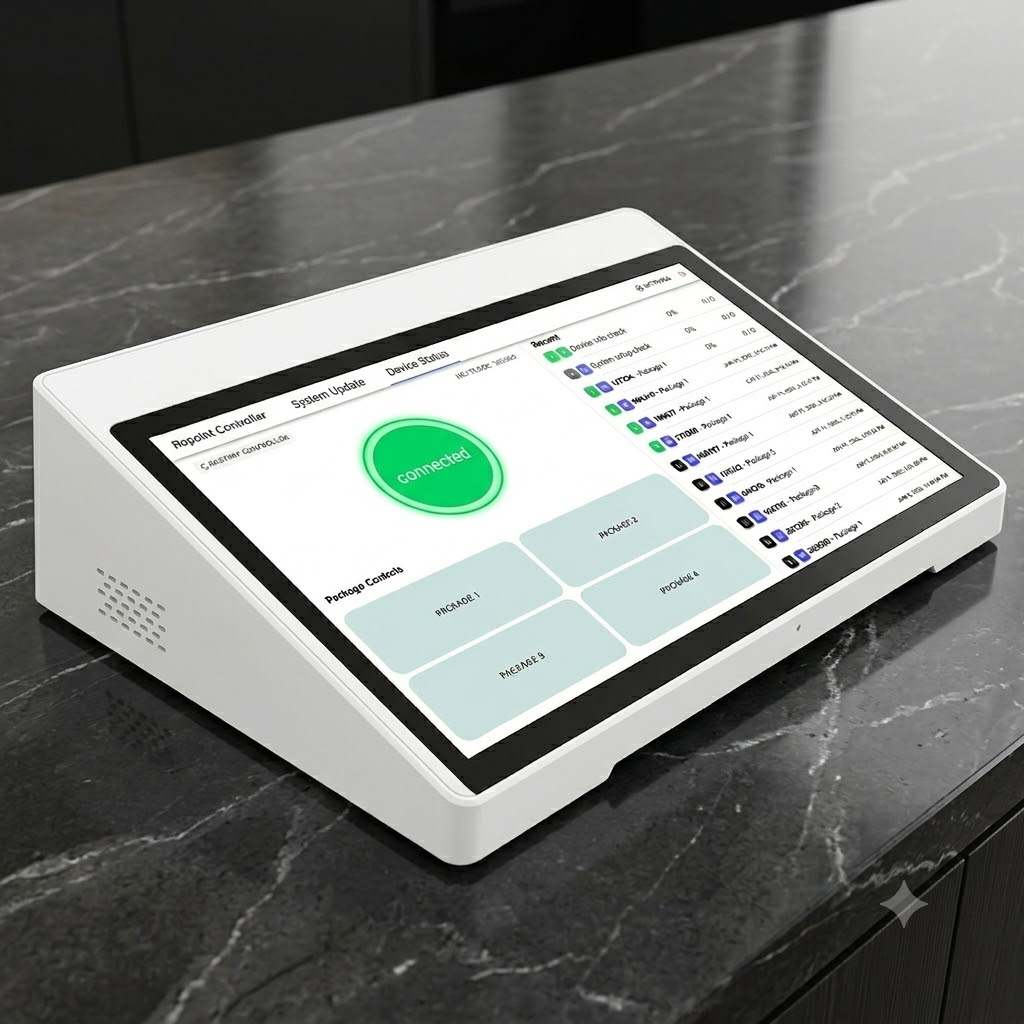
Repoint delivers the unified stack the enterprise suites sell, with hardware sold direct, month-to-month software and no revenue share on memberships. It is designed for retrofits: the Hub drops into the Unitec POS 4000's place and the kiosk connects to the controller you already own.
The one that controls your wash equipment, sells and recognizes memberships at every touchpoint, and leaves the member data and the margin with you. For independents and small groups that usually means a cloud platform like Repoint; for 40-tunnel chains an enterprise suite like DRB may fit.
A generic POS can run the C-store counter but cannot trigger a wash, read a plate, merge lanes or run a tunnel. Car wash-specific systems exist because the controller and the till have to agree on every car.
A POS sells, controls the wash and reports. A membership app adds a subscription layer on top of a POS you already own, usually keeping the member relationship and taking a share of renewals. Native membership engines avoid both.
Not always; they are fast to launch. But run the math on year three: a percentage of every renewal, forever, usually costs more than owning the engine, and you may not be able to take the members with you.
The good ones do. Repoint, for example, drops in for the Unitec POS 4000 and connects to most tunnel, in-bay and rollover controllers. Ask every vendor the same question and get the answer in writing.
It depends on lanes, equipment and pumps, which is why serious vendors quote per site. Compare the software fee, the processing rate, any per-member charges and the contract length, not the sticker on the kiosk.
A retrofit with drop-in hardware is typically an afternoon per site once data is migrated. Rip-and-replace projects take weeks. Ask for the install plan before you ask for the price.
If you run one to a handful of sites, want unlimited memberships without a revenue share, and would rather keep your equipment than replace it, probably yes. Book a 20-minute demo and bring your site layout.
Bring your controller model and your membership numbers to a 20-minute demo and we'll show you the difference on one screen.